
What the surveyor looks at
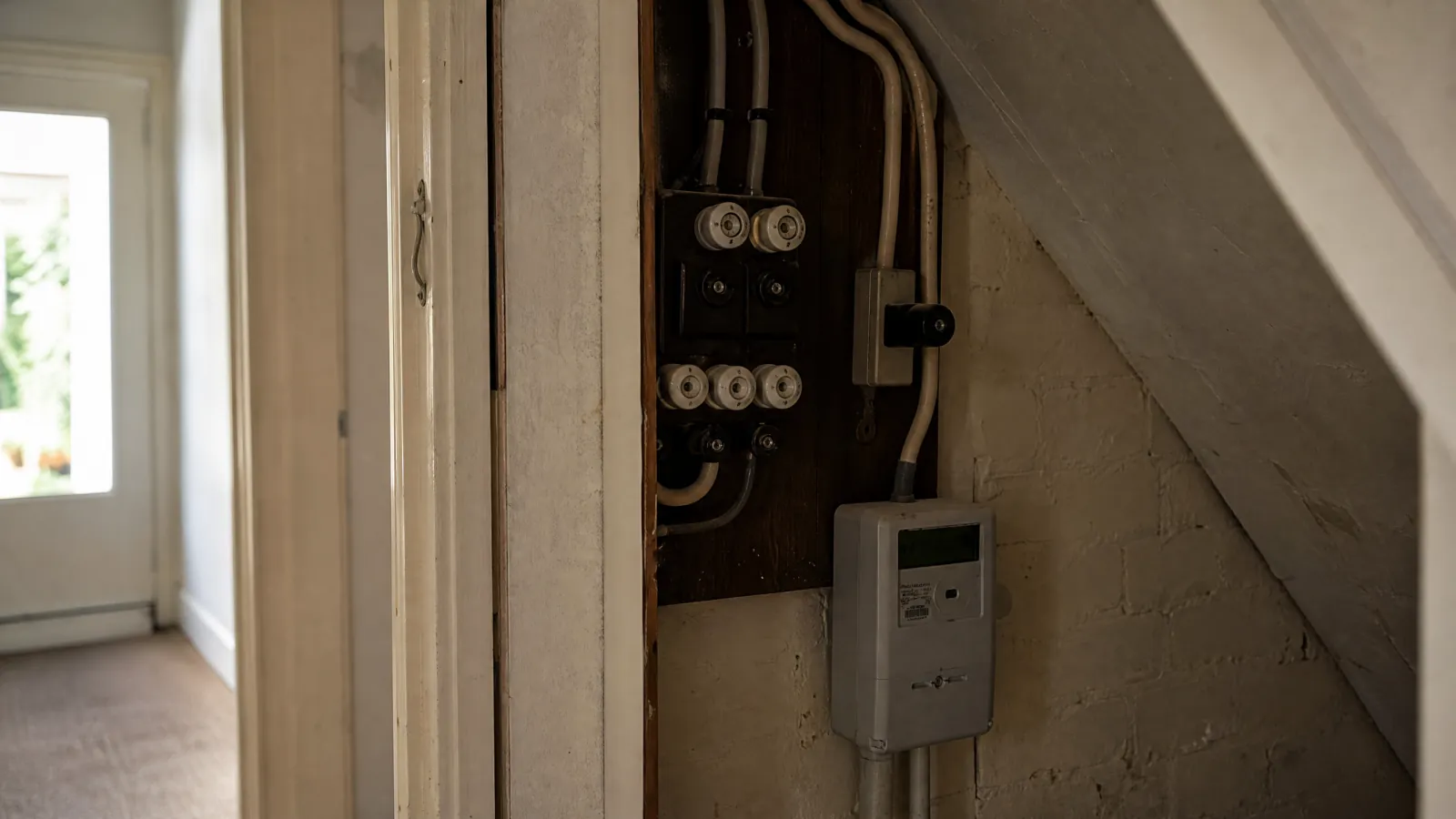
- The age and type of the consumer unit (fuse box).
- Whether there is RCD protection.
- Visible wiring, sockets and switches.
- Signs of DIY work or overloaded sockets.
They don't test circuits, lift floorboards or open up walls. That is an electrician's job.
What an EICR is
An Electrical Installation Condition Report is an inspection and test of the whole installation by a qualified electrician. It lists defects using codes:
| Code | Meaning |
|---|---|
| C1 | Danger present. Needs fixing immediately |
| C2 | Potentially dangerous. Needs fixing urgently |
| C3 | Improvement recommended |
| FI | Further investigation needed |
When to get one
- The survey recommends it.
- The consumer unit has old rewirable fuses or no RCDs.
- The home hasn't been tested in about ten years, or there are no certificates.
- You plan a new kitchen, extension or loft conversion.
Paperwork to ask for
Ask the seller for any EICR and for certificates for electrical work done in recent years. In England, much electrical work in homes must be done by a registered electrician or signed off by building control, so a missing certificate for a new kitchen or extension is worth asking about.
Buying to let?
Landlords in England and Wales must have the electrics in rented homes inspected and tested at least every five years. If you're buying to let, an EICR is part of your plan anyway.
Sources
- Electrical safety standards in the private rented sector (GOV.UK)
- Home surveys: a consumer guide (RICS, PDF)
General information, not legal or financial advice. Your conveyancer and lender advise on your purchase.
How we write our guides. Written by the ClearQuote team from the RICS Home Survey Standard and official UK guidance, and updated when that guidance changes. This is general information, not advice about a specific property: your surveyor’s report covers the home you are buying.