
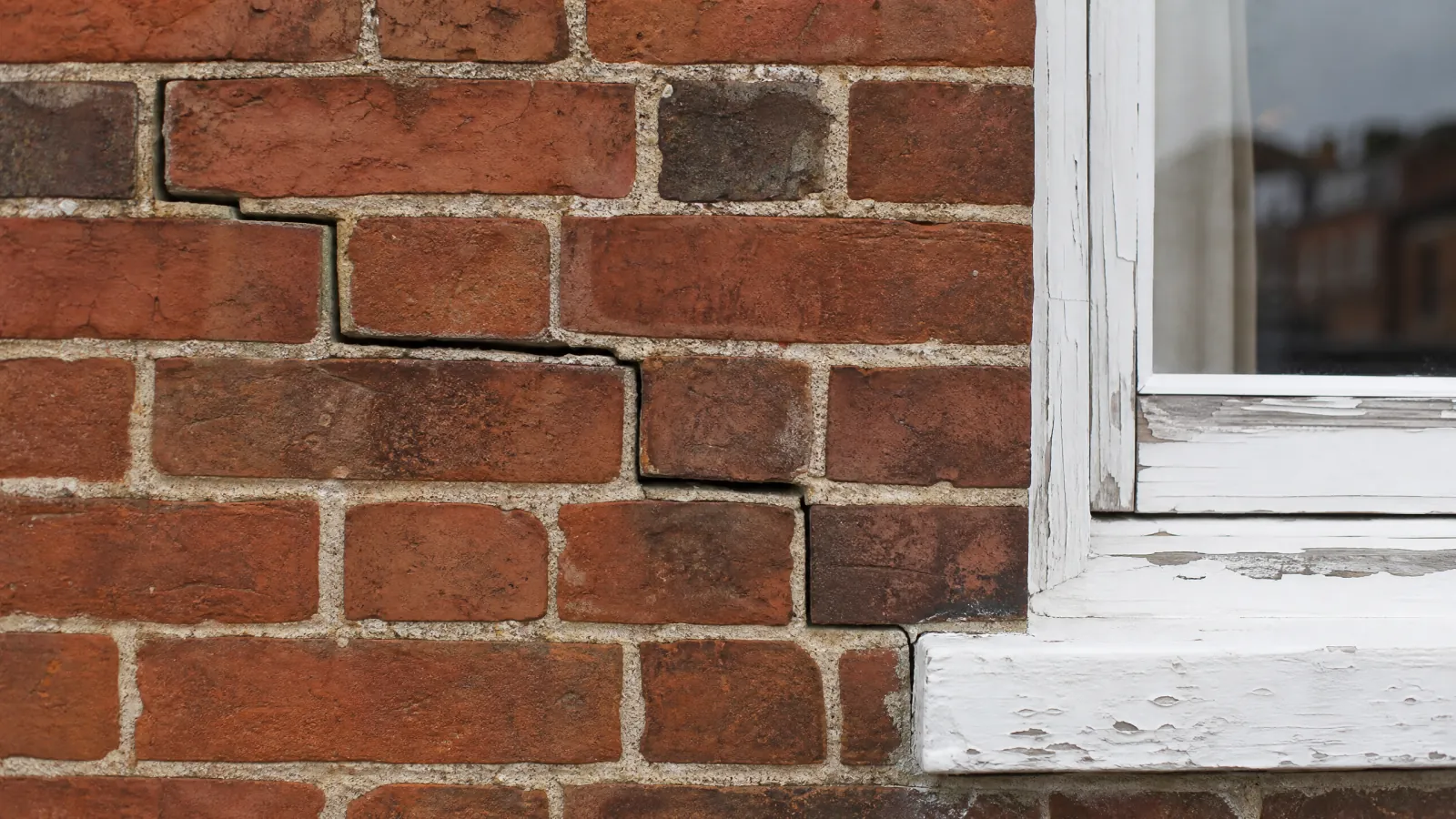
Settlement, subsidence and heave
Settlement is the small, early movement as a new building beds in. It usually stops within a few years.
Subsidence is downward movement of the ground under the foundations, often because clay soil dries out, a drain leaks, or tree roots draw water from the ground.
Heave is the opposite: the ground swells upwards, for example after a large tree is removed from clay soil.
How surveyors judge a crack
| What they look at | Why it matters |
|---|---|
| Width | Wider cracks suggest more movement |
| Shape | Diagonal or stepped cracks, or cracks wider at one end, suggest the building is moving |
| Location | Cracks around bay windows, extensions and corners are common movement points |
| Age | Old, dirty or painted-over cracks are often historic |
| Nearby causes | Large trees, leaking drains and clay soil |
Signs to take seriously
- Cracks wider than a coin's thickness, or that you can fit a fingertip into.
- Diagonal cracks running from the corners of doors and windows.
- Doors and windows that have started to stick.
- An extension or bay window pulling away from the main house.
- Recent cracks in fresh decoration.
What to do next
- Read what your surveyor says about each crack. If they recommend a structural engineer, book one before you exchange.
- Ask the seller about any past subsidence claims, repairs or monitoring.
- Check with your buildings insurer. A past subsidence claim can affect cover and premiums.
Older homes, extensions and homes on clay soils are where a Level 3 survey helps most, because it explains the likely cause. See Level 2 vs Level 3.
Sources
General information, not legal or financial advice. Your conveyancer and lender advise on your purchase.
How we write our guides. Written by the ClearQuote team from the RICS Home Survey Standard and official UK guidance, and updated when that guidance changes. This is general information, not advice about a specific property: your surveyor’s report covers the home you are buying.