
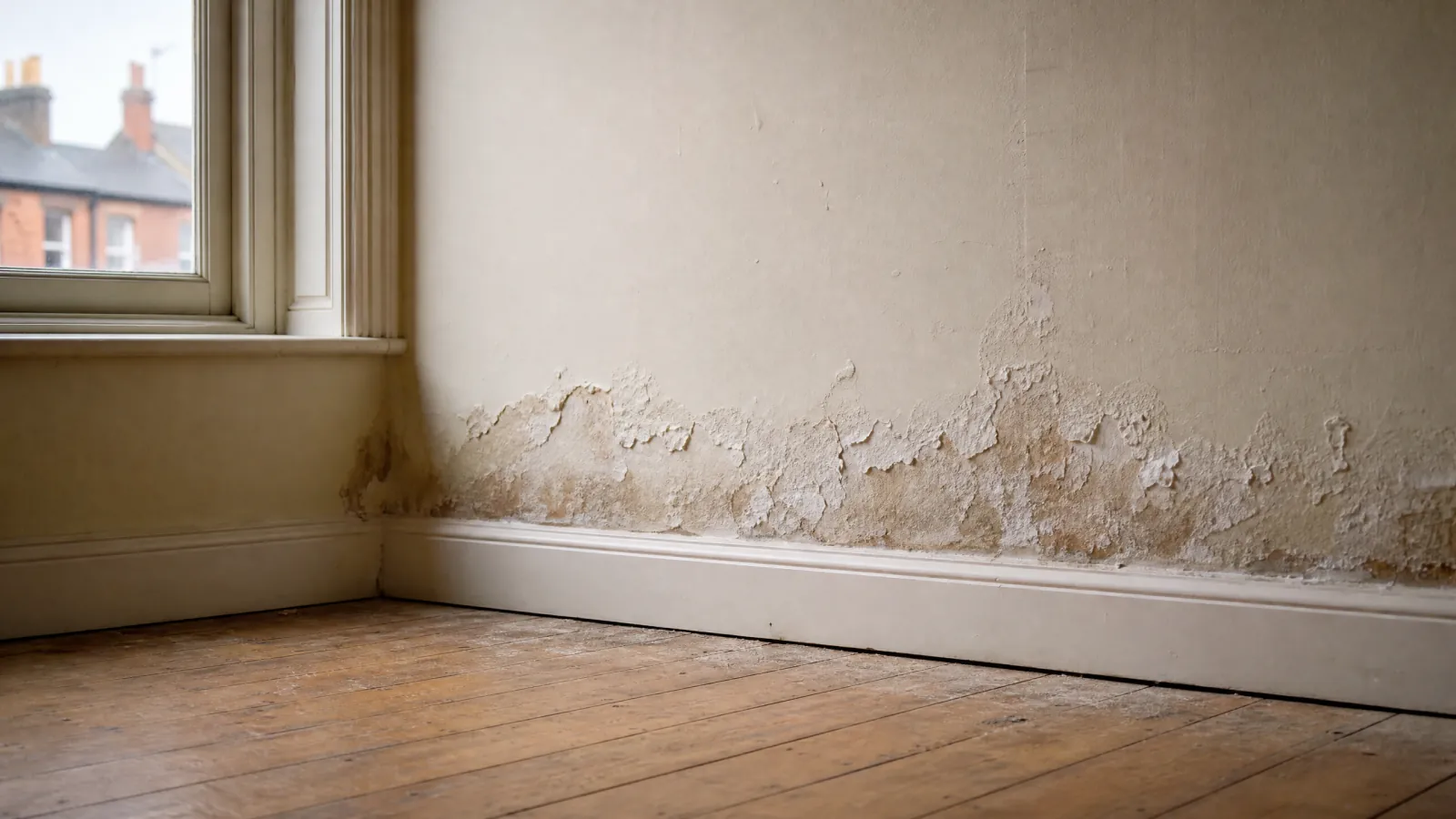
The three main types
| Type | What causes it | Common signs |
|---|---|---|
| Condensation | Moist air from cooking, showers and drying clothes meeting cold surfaces | Black mould in corners, wet windows, musty smell |
| Penetrating damp | Water getting in from outside: gutters, roofs, cracked render, failed pointing | Patches that grow after rain, often higher up walls |
| Rising damp | Ground moisture rising through walls with no working damp-proof course | A tide mark low on ground-floor walls, salts, crumbling plaster |
What moisture readings mean
Surveyors use moisture meters to find where damp is likely. These meters are designed for timber, so on brick, stone and plaster they give a guide, not an exact measurement. Salts in old walls can also make readings look higher than they are. A high reading means "look closer", not "this wall needs injecting".
Older homes are different
Solid-walled homes built before about 1920 were designed to let moisture in and out. Cement render, cement pointing, gypsum plaster and plastic paints can trap moisture and cause damp. Often the fix is to remove the wrong material, not add more. See surveys for older homes.
What to do before you exchange
- Read what the survey says about the likely cause.
- Check the outside first: gutters, downpipes, ground levels against the walls, blocked air bricks.
- If you need a specialist, choose an independent damp surveyor who explains the cause and doesn't only sell a treatment.
- Ask the seller for any damp-proofing guarantee, and check whether it can pass to you.
A Level 3 survey, from £525 + VAT, explains the likely cause of damp in more detail than a Level 2.
Sources
- Home surveys: a consumer guide (RICS, PDF)
- Damp and mould: understanding and addressing the health risks (GOV.UK)
General information, not legal or financial advice. Your conveyancer and lender advise on your purchase.
How we write our guides. Written by the ClearQuote team from the RICS Home Survey Standard and official UK guidance, and updated when that guidance changes. This is general information, not advice about a specific property: your surveyor’s report covers the home you are buying.