
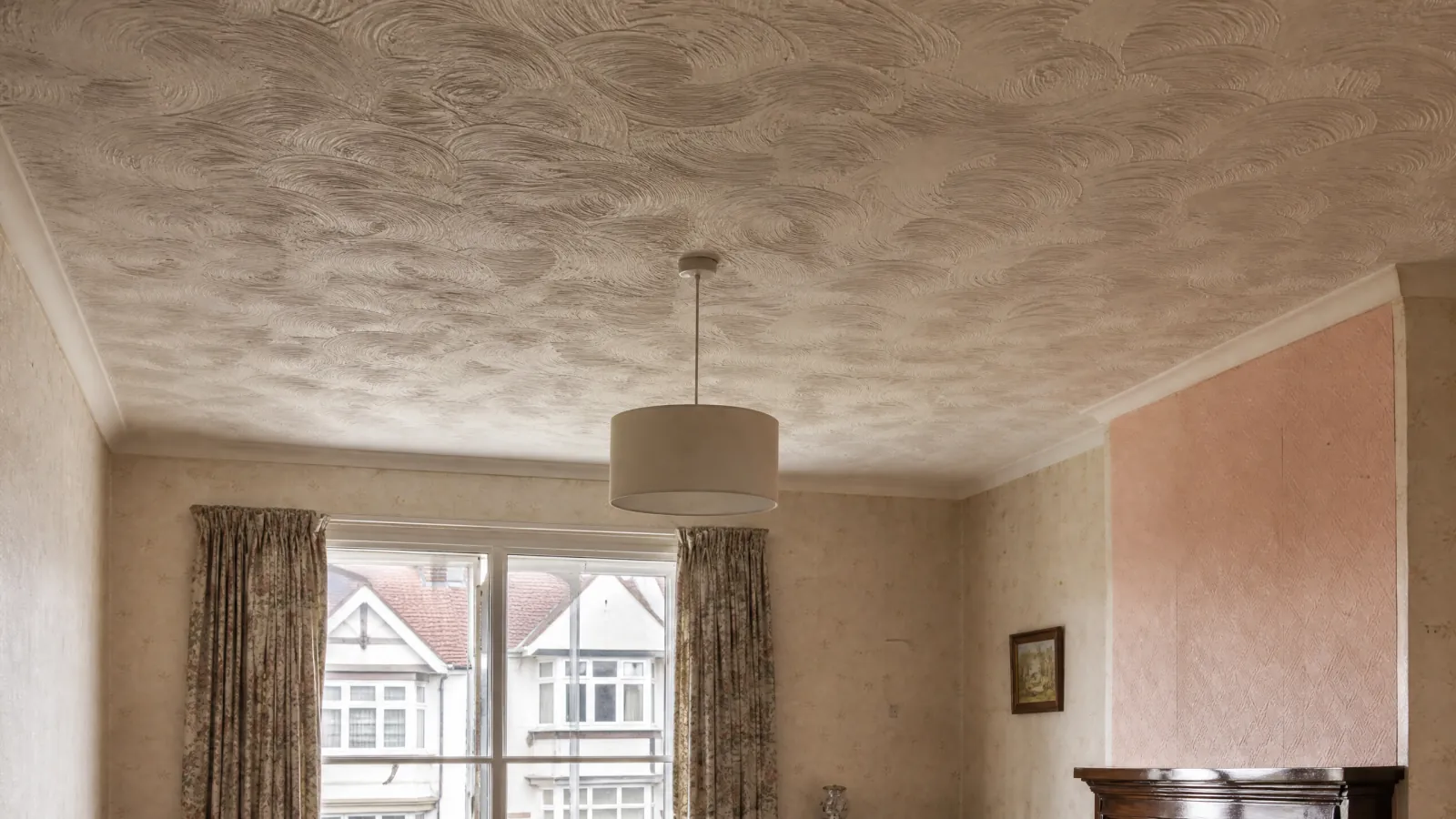
Where asbestos is found in homes
- Textured ceiling and wall coatings, such as Artex.
- Old floor tiles and their adhesive.
- Garage and shed roofs made of corrugated cement sheets.
- Soffits, gutters and downpipes made of asbestos cement.
- Pipe lagging, old boiler flues and panels around boilers.
- Insulation boards in older homes.
What a survey can and can't do
A surveyor can point out materials that may contain asbestos, based on age and appearance. They can't confirm it, because that needs a sample tested by an accredited laboratory. If the report mentions possible asbestos, treat it as a prompt to find out more before you plan any work.
Is it dangerous?
Asbestos is a risk when fibres are released into the air, for example by drilling, sanding, cutting or breaking it. Material in good condition that is left alone is generally considered low risk. Never drill or sand a textured ceiling in an older home without testing it first.
What to do as a buyer
- Note where the survey says asbestos may be present.
- If you plan to renovate, get an asbestos survey and test before the work starts, and include any removal in your budget.
- Use licensed contractors where the law requires them for removal.
- Ask the seller if any asbestos has been tested or removed, and for the paperwork.
Planning big changes to an older home? A Level 3 survey gives more detail on construction and materials. See also surveys for older homes.
Sources
General information, not legal or financial advice. Your conveyancer and lender advise on your purchase.
How we write our guides. Written by the ClearQuote team from the RICS Home Survey Standard and official UK guidance, and updated when that guidance changes. This is general information, not advice about a specific property: your surveyor’s report covers the home you are buying.